New Blog Address

Please CLICK HERE for the new Leadership Beyond Boundaries Web Site/Blog, or type http://leadbeyond.org into your address bar

There you will find updated information about the Center for Creative Leadership's initiative to make leadership development affordable and accessible to people everywhere.


To support this initiative CLICK HERE.
Showing posts with label youth leadership. Show all posts

Friday, August 7, 2009

YWLP: Helping Young Women Lead with Values and Purpose

By Jennifer Habig

The Young Women's Leadership Program (YWLP) was developed at San Diego Campus of the Center for Creative Leadership for high school sophomores and juniors. The 2009 program, which began in July, is designed to help these young women:

  • Make educational and career choices that are in alignment with their preferences, values, skills, and interests;
  • Confidently choose leadership roles when working with teams;
  • Exhibit improved communication as a team leader; and,
  • Continue education after high school at an institution to help achieve their career goals.

Through interactive activities, discussion, practice and reflection, participants work through the following questions with their peers and CCL staff throughout the week.

  • How do your values impact your actions?
  • How does your personality impact your actions and how do you like to work with others?
  • What do you want to do with your life and how do you get there?
  • How do you clearly and confidently communicate your thoughts and ideas?
  • What is your responsibility to make the world a better place?

The students are subsequently putting what they’ve learned into action as they work in partnership with a nonprofit organization to complete a community service project. Each project team is assigned a mentor to encourage participants to reflect on what they’ve learned and set practical goals.

Graduation will take place on August, 2009 as participants share what they learned while working with their teammates on their service learning project. This occasion allows the students to celebrate their success with community leaders, family, friends and CCL staff.

Tuesday, July 28, 2009

Rotary & CCL Partner - Youth Leadership Seminar


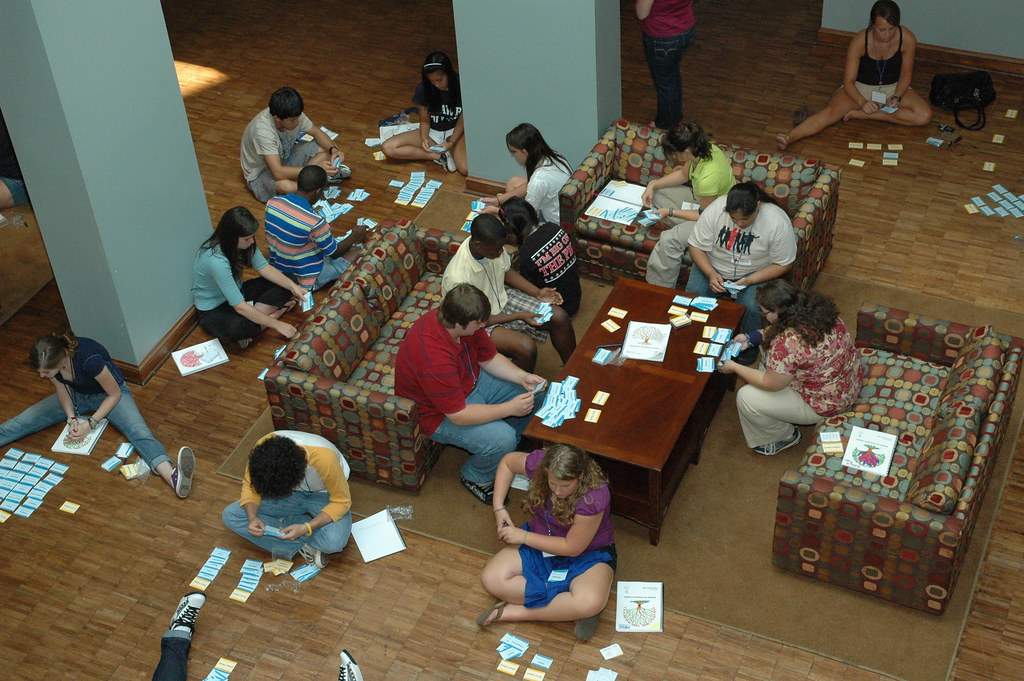
This picture may look like passive youth but inside each of them they are trying to understand what values are core to them; and, are my daily decisions and behaviors in alignment with my core values? This is an example of one of the activities that CCL designed in partnership with Rotary District 7680.
The goal for this program is consistent with the Leadership Beyond Boundaries initiative - making leadership development affordable and accessible for all...what would the world look like if more youth had the opportunity to participate in leadership programs? Early on in conversations with Rotary we heard about their need to revamp an older leadership program and create a newer world class and globally relevant youth leadership seminar for rising Jr's and Sr's in high school. As a result, CCL packed a four day schedule full of relevant and interactive content. Topics ranged from values & social identity to team building, communication, conflict, feedback and goal setting.
While the target audience for this program was youth, adult mentors were designed into the program. What CCL and related research is recognizing is how the role of adult mentors, when intentionally designed into a program, can be beneficial to both the youth, providing valuable support and guidance, and to the adult mentor, being a leadership developmental opportunity for them.
Early feedback suggests most all participants and mentors agree that the experience was powerful...and too short!
To view more pictures of this program check out our Flickr site

Tuesday, May 19, 2009

Leadership Beyond Boundaries Alumni Facilitate UNEP Session in Kenya

by Bancy W. Kubutha and Kristin B. Naituli

The United Nations Environment Program (UNEP) gathered about 40 university students from all over the world in Nairobi, Kenya, from 20th to 26th, April ’09, for discussions and learning on Climate Change: Role of the Sustainability Generation. The overall objective of the workshop was to provide a forum for college students from different regions of the world to engage creatively and innovatively on current environment and sustainability challenges. The workshop program included a session on Student Leadership Development in Universities around Climate Change Issues.

We had two objectives as we started preparing for this event. We wanted to share how we had approached leadership development for a big group of students at Egerton University, with this group of international students attending the UNEP workshop. At the same time we wanted to give them a personal taste of how experiential learning can take place using very simple tools and techniques. From working with Egerton University students on leadership development we observed that leadership training can help students improve their self-awareness and self-esteem; we also observed positive changes in career ambitions and increased confidence in their ability to succeed in life.

As universities are breeding grounds for leaders, we started the UNEP session by a discussion of what leadership is and of the importance of student leadership development in Universities. A participatory question on the role of leadership in addressing climate change issues led into an interesting discussion among the students on how students can inspire, challenge, enable, encourage and be role-models for others in creating an environmentally sensitive society. We learnt that leadership development in universities can be instrumental in helping students unlearn stereotypes, negative attitudes and beliefs that may currently be inhibiting the expression of leadership and leadership ambitions among students. The visual explorer exercise helped guide the discussion on effective leadership in tackling climate change. This rolled into a very lively and entertaining session on mental models. Almost everybody in the workshop had insights and experiences with mental models that they wanted to share. The multicultural background of the participants made the discussion even more fun and interesting to listen to as it unfolded.

It seems, from what we are experiencing here in Kenya, that leadership development in Africa, and possibly elsewhere too, is not so much about lecturing leadership principles, but rather about unlearning mental models through dialogue and learningful conversations. By talking and freely exchanging views, new insights based on one’s own realizations can be reached. A deeper understanding of the concepts is then allowed to emerge from within and learning takes place spontaneously.

Many participants enquired about the availability of the visual explorer tool. We also received requests from Kenyan student participants to set up leadership training at their local campuses. We realize leadership is important to everyone irrespective of their backgrounds; the challenges that the world is facing can and will be addressed through leadership. Leadership development is very relevant and it’s all about contextualizing it in the different areas. We felt encouraged for having contextualized leadership and made it relevant in addressing climate change issues.

Tuesday, October 14, 2008

“The teacher and the student create the learning.”

by Joel Wright

How often does this really happen between a parent and a teenager?

I can only guess what you might be thinking? How is this possible? I’m sure we can all remember teenage moments when our parents or an older adult sat you down for a teachable moment. I squirm even at the thought of some of these moments while simultaneously wondering how they could be more comfortable, rewarding and co-developmental for both parent and child.

Contrary to my memory, and in quest of how to enhance early leadership opportunities, this past September I witnessed an inspiring and engaging exchange between many parents and their teenagers. These interactions occurred at the Greensboro YMCA during a Black & Hispanic Achievers program orientation/open house where CCL & YMCA staff designed activities where parents and teens could share with each other where and when they learned various life lessons about leadership.

The inspiration behind creating these interactions came from CCL’s recent initiatives with early leadership development (those from their early teen years to early thirties). What we continue to hear is that the most influential leaders that young people learn from are those who are around them day in and day out. It’s these people they see who are modeling leadership in action. In particular, it’s parents, family members, teachers, and coaches. While this is no surprise in some regard it does pivot the focus from exclusive youth development programs to considering designs that engage young and adult.

With the intent of increasing the connection and intention of leadership development between teens and parents we designed a few short, quick leadership activities. Two new activities we designed for this program were: “Leadership Family Tree” and “Leadership Life-Line”. Both proved profound and engaging.

One early leadership story we heard from a 13 year old was about being on a baseball team. He shared how “my baseball coach would take me out of the game and put someone in that wasn’t as good as me but I gave them tips on how to play that position like I did and at the baseball banquet I was given the award ‘team before self’. That was my leadership role.”

Countless other stories were surfaced by both young and old. In reflecting on and processing all these stories, we kept hearing a couple of key words coming to the surface. The first was responsibility. Young and old referenced early leadership lessons taking place when they were given or assumed responsibility to do something. Examples spanned from sports, to baby-sitting or house-sitting, to various formal and informal roles in school. A few of the other key words pointed to leadership skills, traits and/or lessons that were being enforced early on. They include: respect, listening, truth telling, “think of others before yourself,” or “help those who need it”. Such simple lessons but yet so significant for the stature of a leader. Amazingly, these short, simple activities proved to be immensely profound, comfortable and inspiring for all.

In three ways, many of us at CCL found this day and these activities extraordinary. First it allowed a comfortable shared learning exchange between parent and child. Second, the interactions allowed for a mutual appreciation and respect to occur between the two that added to the depth of the discussion. And third, the exchange often left both parent and child surprised about how much each could learn from the other.

When training, I often quote an Asian proverb, “the teacher and the student create the learning.” I do this as a quick reminder that the person in the front of the classroom, the “leader”, doesn’t always have all the answers. In fact, often the learning, growth, creativity and community are only enhanced when everyone contributes. Certainly, on this Saturday in September parents and teenagers created the learning and it was leadership in action.

Wednesday, September 3, 2008

Leadership Development for the Majority


Originally posted on Lamp Post Reports - August 17, 2008 - by John T. Vaughn

The Center for Creative Leadership (CCL), based in Greensboro, NC over the past forty years has established itself as one of the, if not the, premier leadership development institutes. CCL’s specialty, historically, has been providing leadership development to Fortune 500 & 5000 type companies, the US Army, Air Force, Navy and Special Forces among other top clients. CCL has written and researched extensively on the subject of creative leadership, defined as “the capacity to achieve more than imagined by thinking and acting beyond boundaries” (from HBS case study on CCL). Currently, they have satellite offices in Colorado Springs, Colorado; San Diego, California; Brussels, Belgium; and Singapore. Dissatisfied with reaching only the 20,000 or so clients who annually pass through CCL training programs, CCL launched the Global Voice of Leadership (GVOL) initiative roughly three years ago. The GVOL initiative was launched with the intention of providing forty years worth of knowledge capital in leadership development to the majority (some like to call it the base of the pyramid).

CCL has been working on this initiative in a number of ways, but the one I can speak most knowledgeably of is their effort here in Ethiopia. Back in February I attended CCL’s first ever Leadership Beyond Boundaries course, a two week course to provide leaders in the developing world with the necessary tools and training to take what they learn about self awareness, direction, alignment, commitment and giving feedback back to their staff (most located in the developing world). The first course was hosted at CCL’s headquarters in Greensboro, NC but leaders based in Nigeria, Lagos, Kenya, Sudan, Uganda, India, the Caribbean, the US and other areas attended. Needless to say, it was quite the diverse group and I learned a tremendous amount.

Since that time, CCL has been engaged in a more intimate, though informal, relationship with Cherokee Gives Back. Gives Back’s presence in Addis provided CCL a base from which to recruit attendees for a Leadership Beyond Boundaries program held in Addis Ababa in mid-July. The workshop turned out to be quite a success. During the last two days of the workshop, the primary attendees (eleven in all, from various countries in East Africa) were required to practice what they learned by delivering a Leadership Essentials workshop to nearly forty local leaders (again, with the hope that these leaders would then train their staff or colleagues). These forty local leaders were from various sectors including non-governmental organizations (NGOs), the private sector and university students. The feedback from the program was generally quite positive, but that was only the tip of the iceberg.

Since the completion of the Leadership Beyond Boundaries workshop, Steadman Harrison and Dou Fall of CCL have been meeting with various organizations throughout Addis Ababa. These meetings have included a range of organizations and institutions from faith based youth programs, to Midroc (the largest private corporation in Ethiopia), Addis Ababa University, various NGOs and other grass roots organizations.

Even CCL, it seems, has been a little surprised by the high demand and prior knowledge of their organization and expertise here in the Horn of Africa. Steadman and Dou have proposals that, if signed, will keep them busy in Addis for at least the next few months.

As well, discussions have been initiated with community leaders around the topic of bringing leadership development to the majority, or base of the pyramid. This is certainly a challenge, as nearly 80% of the population is located in rural areas (costly to reach), and a large portion also do not read or write. At our first brainstorming session, the idea of broadcasting a leadership development series over the radio was mentioned as a possible distribution channel. At first glance, this idea appears to have potential as it is very much an orally based society and many people have radios, or at least access to them. As well, start-up costs should be minimal, but legalities may prevent such a series from ever launching.

One thing is clear, the demand for CCL’s expertise in creative leadership development and creative solutions is very high among the private sector, academic community, NGO sector and at the grass root level. With any luck, the contracts signed over the past few weeks will allow CCL to continue its focus on leadership development in the Horn, with the ultimate goal of providing their expertise not just to those capable of paying traditional rates but also to the majority, the base of the pyramid.

Friday, June 20, 2008

Early Leadership Development in Sri Lanka – Preparing for What’s Possible

By Joel Wright

In March 2008 I returned to Sri Lanka where from 2004 – 2005 I worked with the National Council of YMCAs to design and deliver various leadership programs. During that first trip, the Indian Ocean tsunami rushed ashore and as a result, several of the young adults I was training were tapped into regional leadership positions to assist in the recovery and community rebuilding efforts. Part of the goal for the return trip in March was to explore and better understand the impact that early leadership training had in the face of responding to a crisis. The other focus of my trip was to continue CCL’s Global Voices of Leadership effort of developing and testing leadership content that could become curriculum for our early leadership development effort.

The first leadership program conducted was a one day program that translated some of CCL’s core content: Direction Alignment Commitment (DAC) and Assessment Challenge Support (ACS). Typically used with executives around the world, DAC & ACS was adapted to youth friendly scenarios and examples making it understandable and relevant to this younger audience. Additionally, this day program included CCL’s Active Listening guidebook which was converted into curriculum and used as a piece of the program. While the program went extremely well there were some good lessons learned about better ways to facilitate when content is being translated into another language. Overall, the program was a success and I must say I’m always amazed at how eager Sri Lankan youth are to learn and engage. To me it speaks to how much they are craving these types of developmental opportunities.

As is often the case when I’ve traveled as a leadership trainer, people often spring requests on me, could you run an impromptu program for a group of about twenty youth? It’s why we’re here, is usually my response because to deny these young people an opportunity to grow towards their potential just doesn’t feel right. As a result I found myself working with my wife and two of her fellow public health graduate students conducting a last second program that combined the YMCA’s motto of spirit, mind and body with leadership for life. The combination proved potent with one young Sri Lankan sharing, “I think it’s very useful to my future life so I think now I’m a perfect person.” Since sharing this statement around CCL one colleague said, “Perfecting people in 3 hours! Awesome.”

While every portion of this trip to Sri Lanka proved to be powerful perhaps the biggest surprise was in reconnecting with those young professionals whom I trained prior to the tsunami and hearing about the impact those early trainings had on them. As I listened and collected stories and experiences about the tsunami, it became increasingly clear that each of the four young professionals “tapped” into leadership positions, cited their early leadership training as important in helping them fill their role, connect and collaborate with everyone from local community members to the multiple different organizations, agencies and individuals who came in from all over the world. Such a unanimous response pointing to parts of their leadership training was indeed quite a surprise and nearly everyone interviewed discussed the importance of developing future leadership at the grassroots level.

In talking about the impact of leadership training with many different people in Sri Lanka, I often asked the question, what role would leadership training have on youth around the country? Many responded with similar answers such as “youth need this” or it would be the “best thing” in the midst of their situation.

It’s stories of impact and hope such as these that we at CCL continue to hear about around the world and that drive us to ask, what would the world look like if more or even all youth could have access to leadership opportunities? Perhaps we let one Sri Lankan youth answer this for us, “it would enable youth to work on improving all aspects of our society.”

Sunday, January 27, 2008

Leadership for the BoP and the Bottom Line

By Philomena Rego and Lyndon Rego

On our trip to India in December 2007, we met with several corporations, educational institutions, trainers and young professionals. Most inspiring was our meeting with KC Kurien, who heads the people diversity initiatives at Pantaloon. Pantaloon Retail (India) Limited, is India’s leading retailer with more than 500 stores in 51 cities across India and over 25,000 people. What’s especially noteworthy is that the majority of employees come from lower economic groups. Organized retail is emerging as an important source of jobs in India, and is expected to add 2.5 million jobs by 2010. We found Pantaloon’s training approach to be remarkable on a number of levels:

  1. While the war for talent in India is aimed at attracting the best educated, Pantaloon’s employees are typically young people from slums who might not have a degree, but have aspirations like everyone else.
  2. Their innovative approach centers around helping these individuals be successful and providing opportunities and resources for developing their self-esteem and aspirations for their life and work. They ask recruits “what is your dream?”
  3. The training approach is holistic and extends beyond building skills needed to fulfill job requirements to encompass the overall well being of the employee. They provide parenting classes, continuing education, and even have a happiness index to gauge overall employee satisfaction.

We asked KC, who came to Pantaloon after heading the design school Shristi, how he developed this unique orientation. He said he gained insights from watching beggars at a traffic intersection and reflecting on why some beggars were more successful than others. He found that it had to do with self-confidence. KC’s stint with design enables him to look at developing people with fresh eyes and to try new approaches.

Pantaloon’s parent organization is the Future Group, led by the visionary Kishore Biyani. The organization’s manifesto speaks of “rewriting rules” and “creating the future” and identifies among its core values: leadership, building relationships, humility, introspection, openness, and adaptability.

The link that Pantaloon has traced between individual self-awareness / empowerment and organizational success is at the heart of the Center’s vision to make leadership development more accessible and available in our world. Pantaloon -- and the aptly named Future Group --provides an inspirational example of how we can create a brighter future for those at the bottom of the pyramid through leadership development.

Monday, December 24, 2007

Designing a Sustainable Future

At the Design with India conference I attended in Bangalore, Geetha Narayanan, the founder of Srishti asked, is the current economic model (that pits development against the environment) the only way forward for India. While the conference showcased the work of talented commercial designers, the role of design as a means to take on social challenges was very much front and center. How can we make sure that economic development doesn’t marginalize the poor or destroy the environment? In Bangalore, the pace of development is simply staggering. New shopping malls, office complexes, residential high-rises, and a commercial airport are all mushrooming, outpacing roads, power, and water supply. The growth is dynamic and creating prosperity, but not without unwanted side effects. The idea that design can make a difference is key.

Design thinking doesn’t assume that what’s gone before is what should be, or that problems are intractable. The ability to envision and enact fresh solutions is predicated on the belief that such solutions are possible in the first place. Poonam Kasturi is a designer who is building such solutions. She is created Daily Dump (http://www.dailydump.org/), an enterprise to support urban composting. Sixty percent of Bangalore’s urban waste is organic. Turning it into compost, reduces landfill and facilitates recycling of the non-organic waste, such as cardboard and plastic. Poonam’s solution is an elegant stack of earthen pots that can fit physically and aesthetically into small urban apartments. At Poonam’s design school, Srishti, alumni say what they learn that is the most important is the ability to think creatively. A broader challenge for India, is to increase the number of people who can think and create the kind of future we want.

The Center is working in India to increase the number of creative thinkers in an educational environment that has traditionally favored rote learning. In meetings with a number of educational institutions we’ve found a readiness to think about the role of creativity and leadership in preparing students for the future. We’ll have more to report on this front in the months to come.